
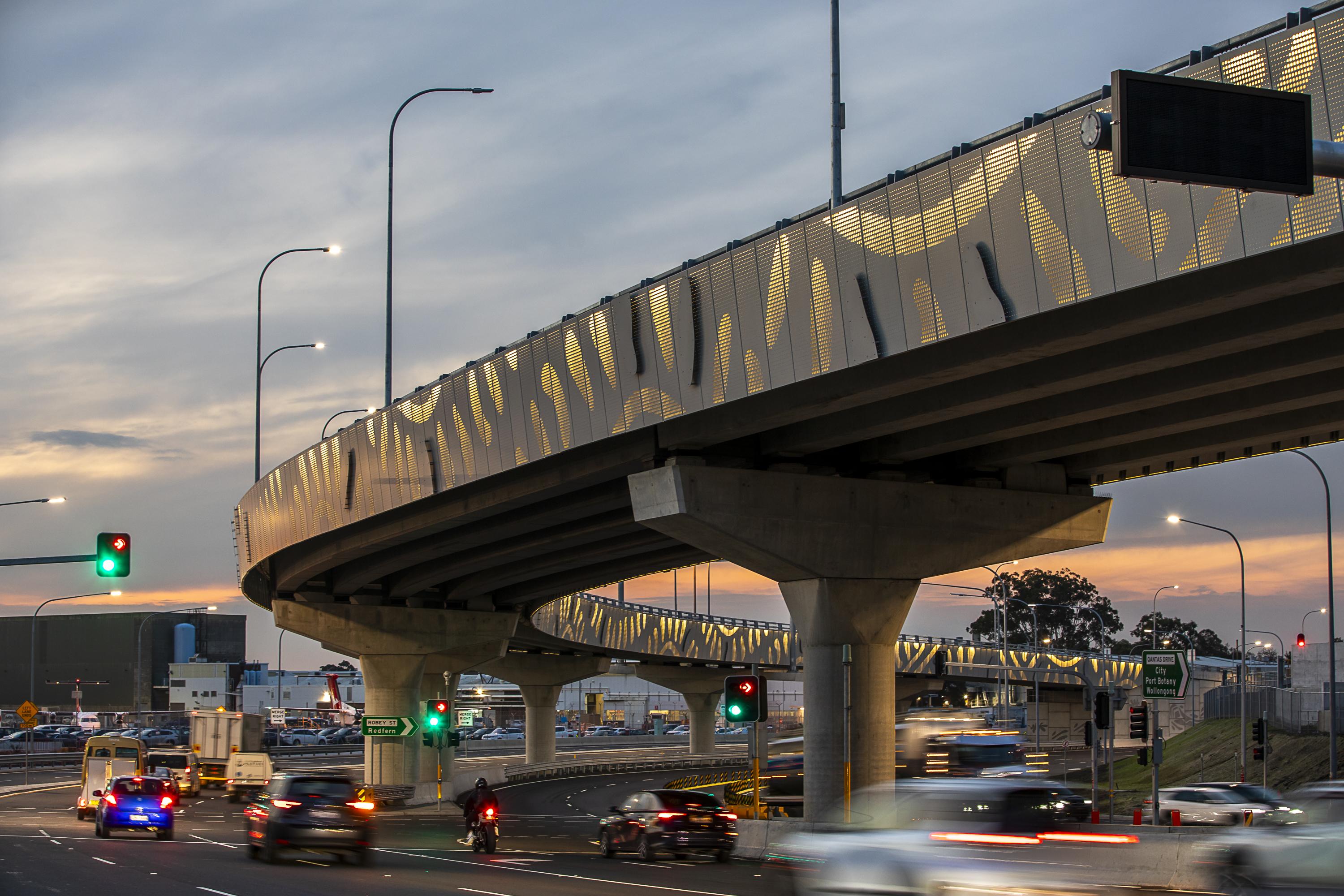
Sydney Gateway with Re-Right Collective
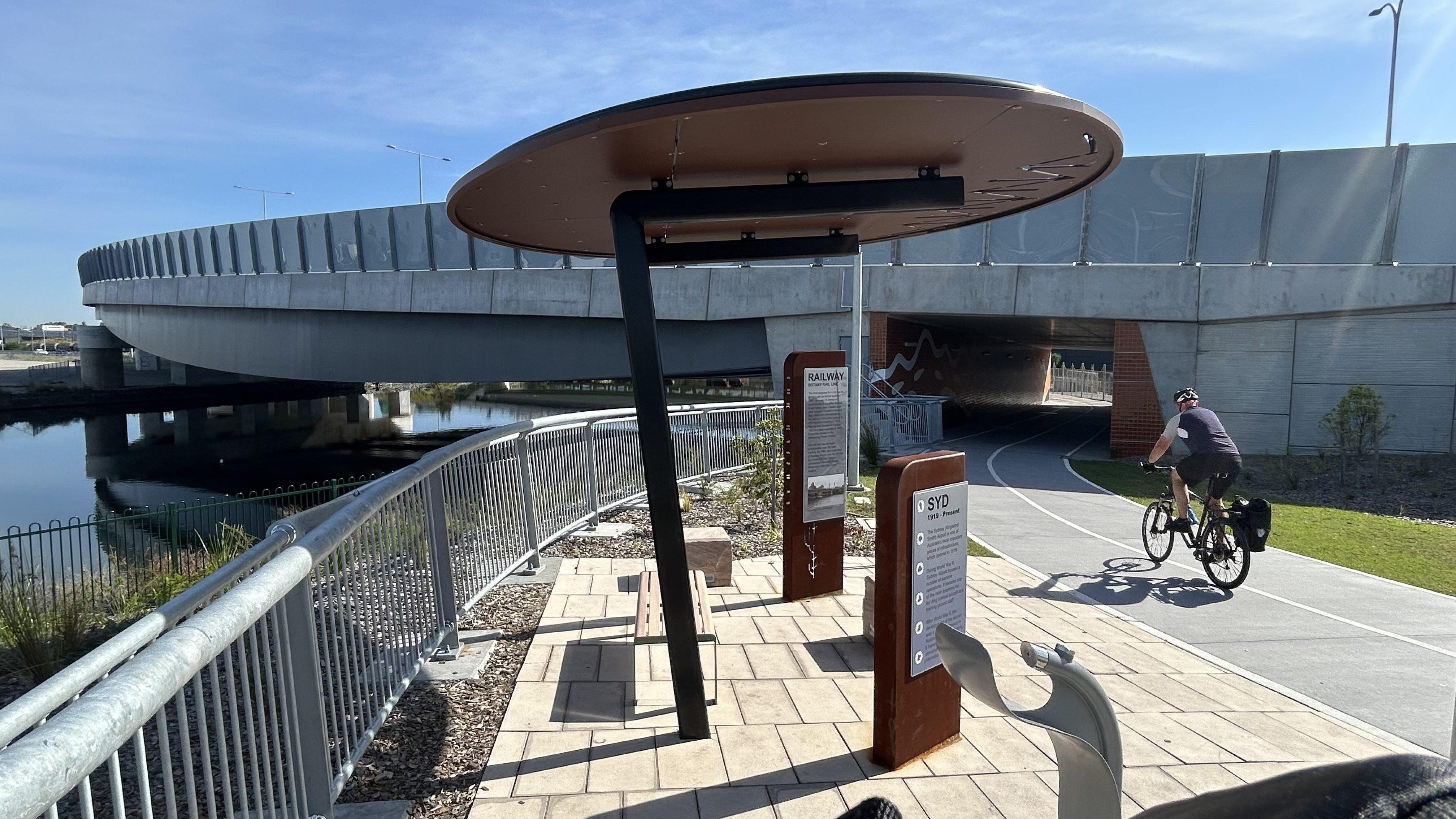
Sydney Gateway connects people to Country, culture, and community through a transformative active transport link. Collaboration with Dharawal Elders, artists, and designers has created a living story told through art, landscape and built form.
More than a route, it offers space to reflect, move, and experience Country from land, water, and air, a truly inspired infrastructure outcome.
2025 AILA NSW Landscape Architecture Award for Urban Design
Sydney Gateway is a New South Wales (NSW) Government and Transport for NSW project that will improve road and freight rail through Sydney Airport and Port Botany. The Gateway project generated a unique opportunity for cultural placemaking at the scale of a Motorway with the integration of culturally appropriate First Nations-led public art.
The Gateway site has been conceived as a large format environmental artwork that will engage all audience groups and create a space of cultural exchange. The site’s inherent significance and the scale and complexity of the project called for a collaborative creative approach between the urban design team, artists, curators and Cultural Advisors.
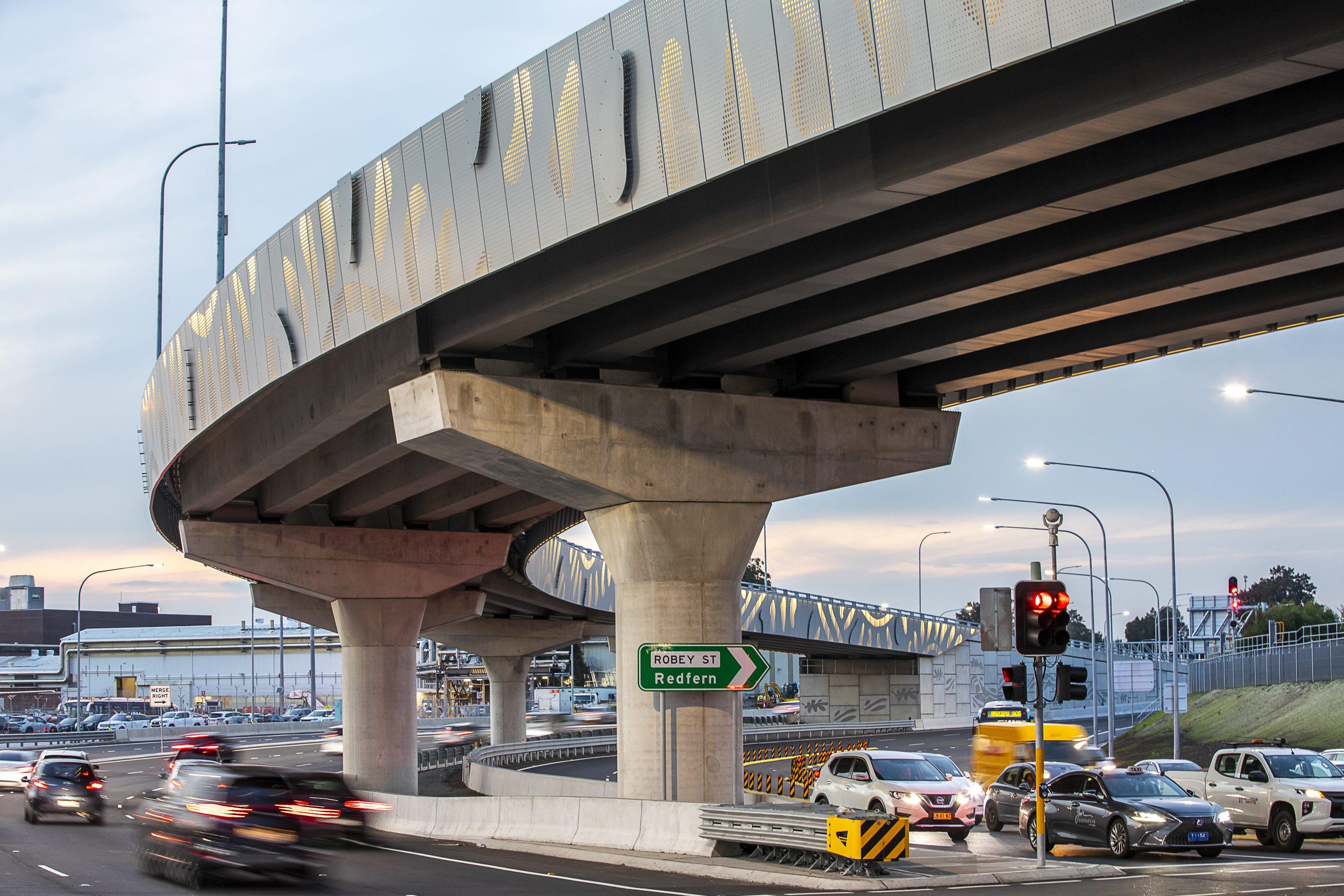
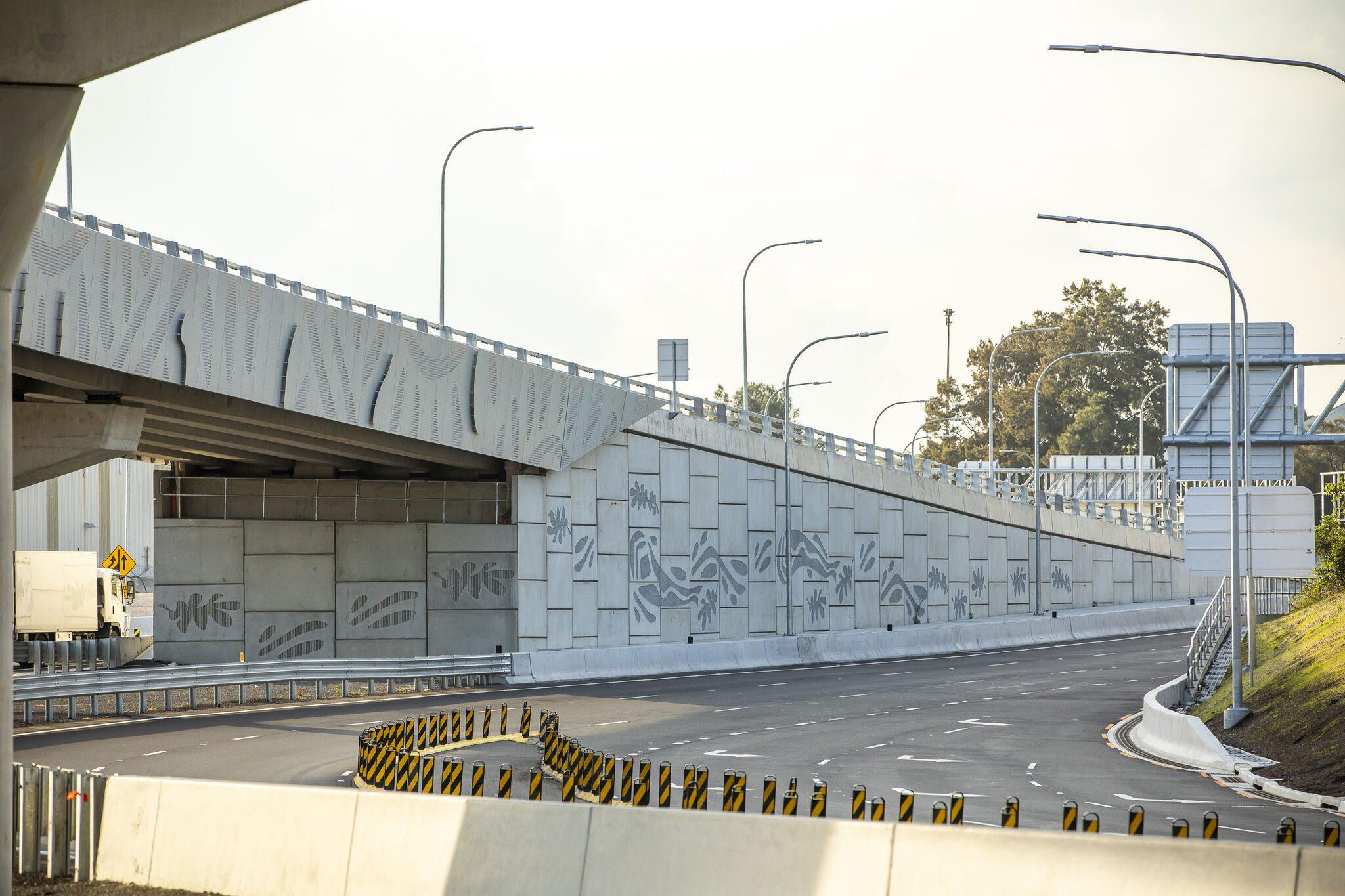
Re-Right Collective worked with Dharawal Cultural Advisors, Uncle Steven Russell and Aunty Phyllis Stewart to create culturally appropriate designs for five project areas across the site including landscape forms, retaining walls and viaduct screens. Intensive collaborative design workshops were held regularly. During these sessions, various scales and application methods for the cultural design elements were investigated by the urban design teams in conversation with the artists and Cultural Advisors.
The project has resulted in art integrated into the urban landscape contributing to a strong and meaningful sense of place that honours and elevates longstanding and continuing Connection to Country and in this case creates a “gateway” arrival experience.
Images by Aran Anderson and Gareth Collins.




WHERE THE SKY MEETS THE LAND AND SEA
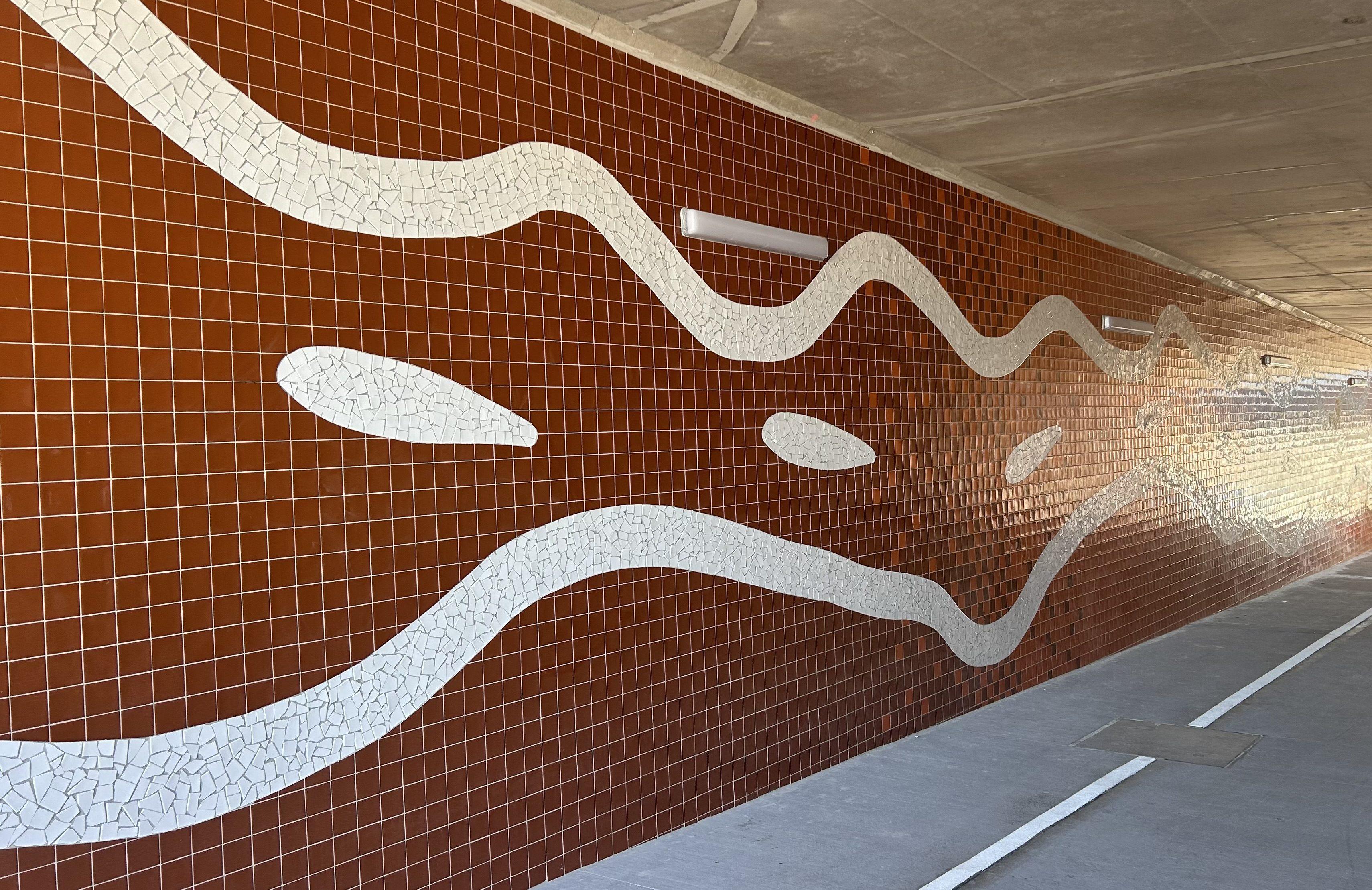
Re-Right Collective identified key cultural practices that inform historic and contemporary experiences as a way of celebrating culture and shaping the visual identities of Country as people experience these Sydney pathways. The narrative of the mullet fish and the weaving patterns tie both the artworks and infrastructure elements together.
The significant story of the mullet fish has evolved over time with traditional fishing practices using woven nets and fish hooks carved from stone and shells. Today, the story of the mullet fish and the mullet run still exists and is celebrated every year by the Aboriginal community of La Perouse.
The weaving patterns reflect the works of Uncle Steven Russell and help to continue the legacy of the traditional and cultural practices. The boomerangs are very significant to the La Perouse Aboriginal community, making and producing these on Country.
Accompanied with this story of the mullet and the weaving patterns are other core elements such as fish hooks and flints (bara) that are wrapped in the form of a line that represents the coastal line, the coastal wattle which is related to the movement patterns of the mullet when it starts to bloom; and the nawi (canoe) which was considered to be one of the first modes of transport in this place. These elements share greater knowledge of how Country took care of people, and how people cared for Country and cultural knowledge.
Mascot, NSW
John Holland Seymour Whyte Joint Venture
Sydney Gateway Stage 1 & 3
Re-Right Collective (Dennis Golding and Carmen Glynn-Braun)
2023

Address
-
Suite 102, Level 1, 7 Kelly
St Ultimo NSW 2007
Address
-
Suite 102, Level 1, 7 Kelly
St Ultimo NSW 2007
- Cultural Capital is a NSW Government Approved Supplier
- 2026 — Copyright