

Canal to Creek Public Art Program
The Canal to Creek Public Art Program aimed to elevate Sydney’s place as a global city and deliver a cultural legacy to the communities of the new M8. Its art will go on giving for decades: augmenting identity, delighting citizens, increasing well-being, attracting visitors, enlivening the public domain, and inspiring an emerging generation of artists.
The Canal to Creek Public Art Program is a series of eighteen commissioned artworks across Sydney’s inner west suburbs from St Peters to Beverly Hills curated and delivered by Cultural Capital. The program includes contemporary sculptures, artist-designed playgrounds, murals and immersive lighting installations that activate new and existing parklands along the new M8.
The artists are a diverse mix of local, international, emerging and established contemporary. There are multiple commissions by Aboriginal artists, broad multicultural perspectives and a large scale mural by an artist working with a disability.
Each work is a site-specific exploration of the relationship between people and place. Individually the works tell a unique story of place and community.
You can learn more about the Canal to Creek Public Art Program via the Canal to Creek Education Portal.

Warren Langley, Wolli
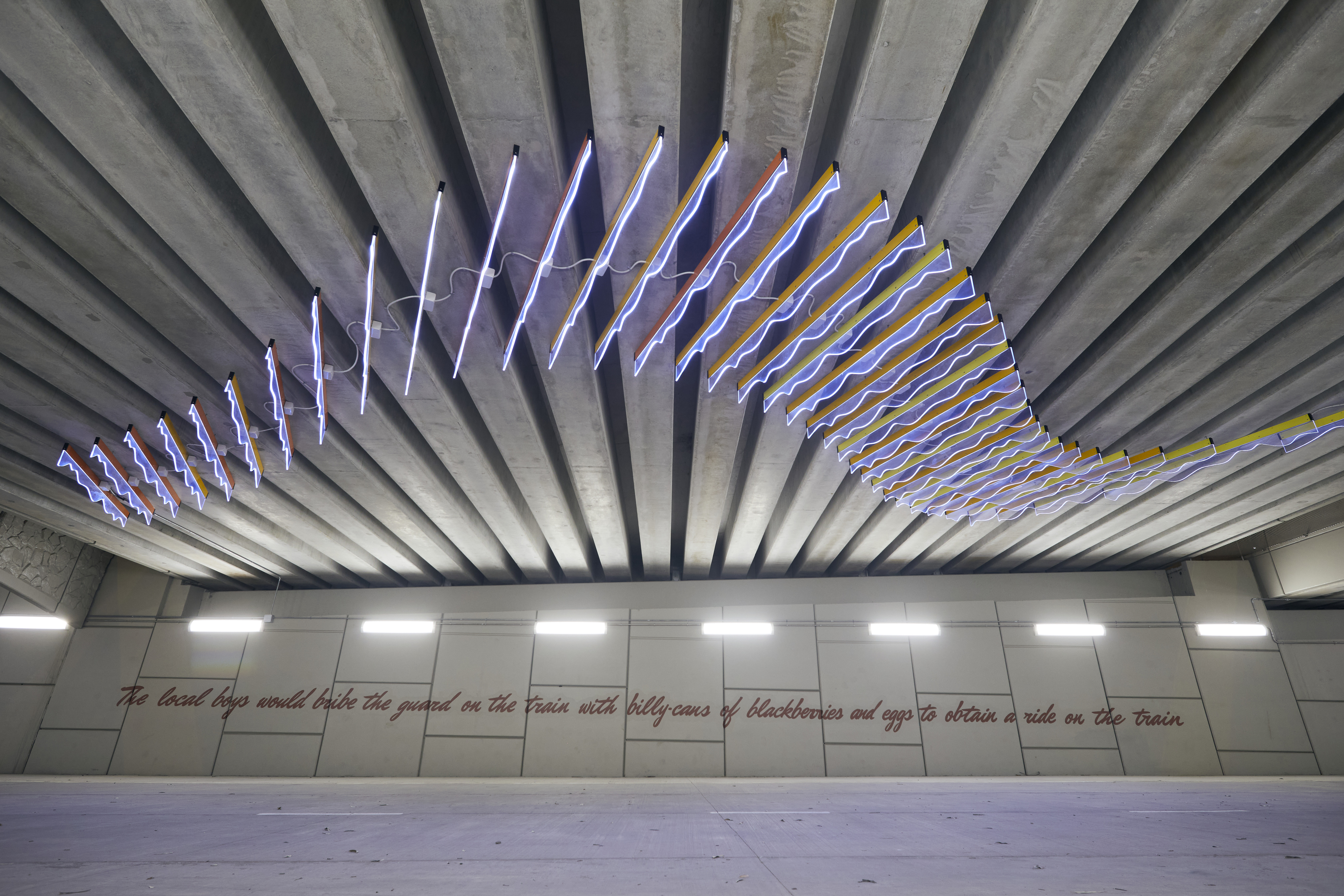
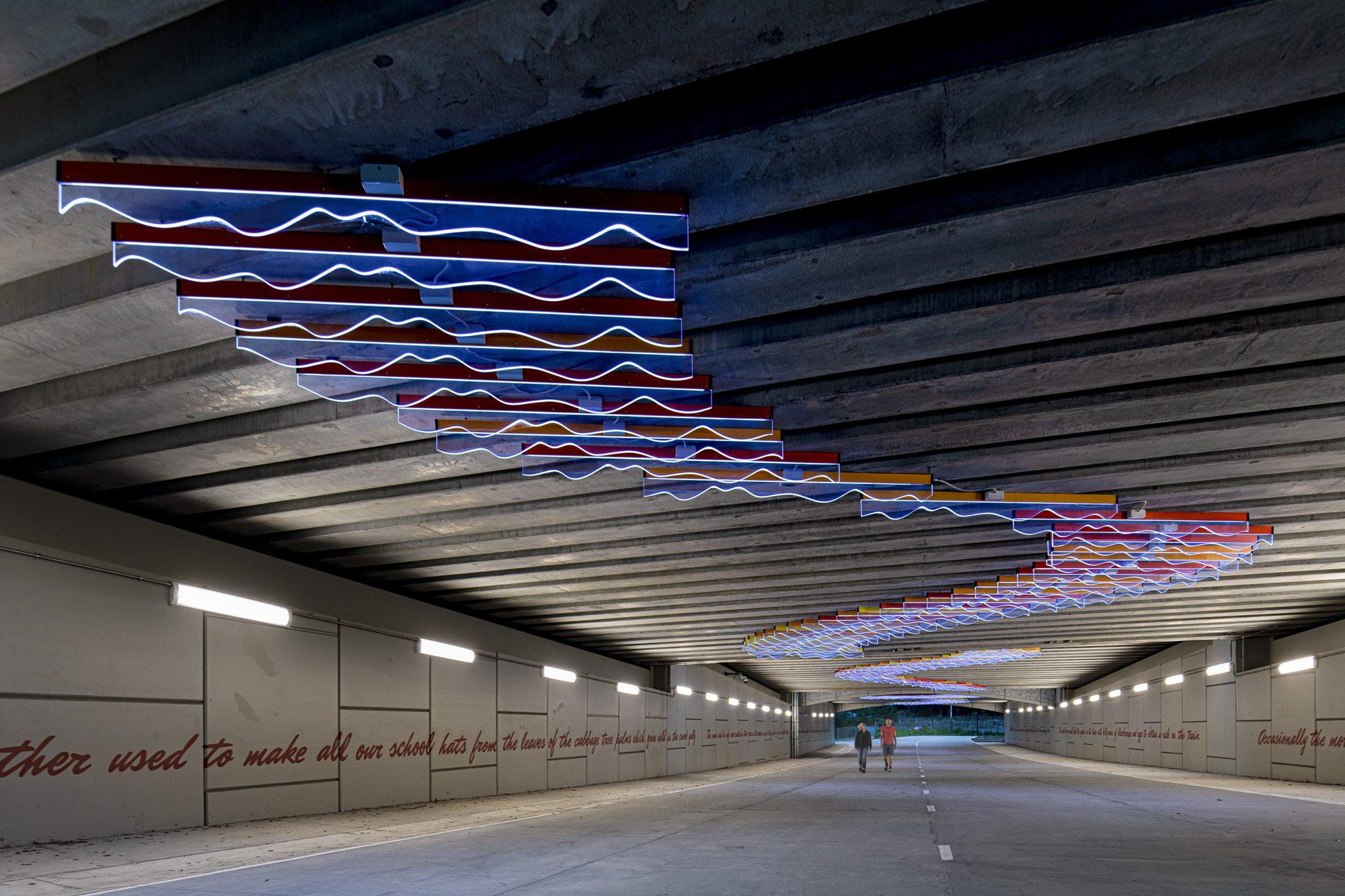
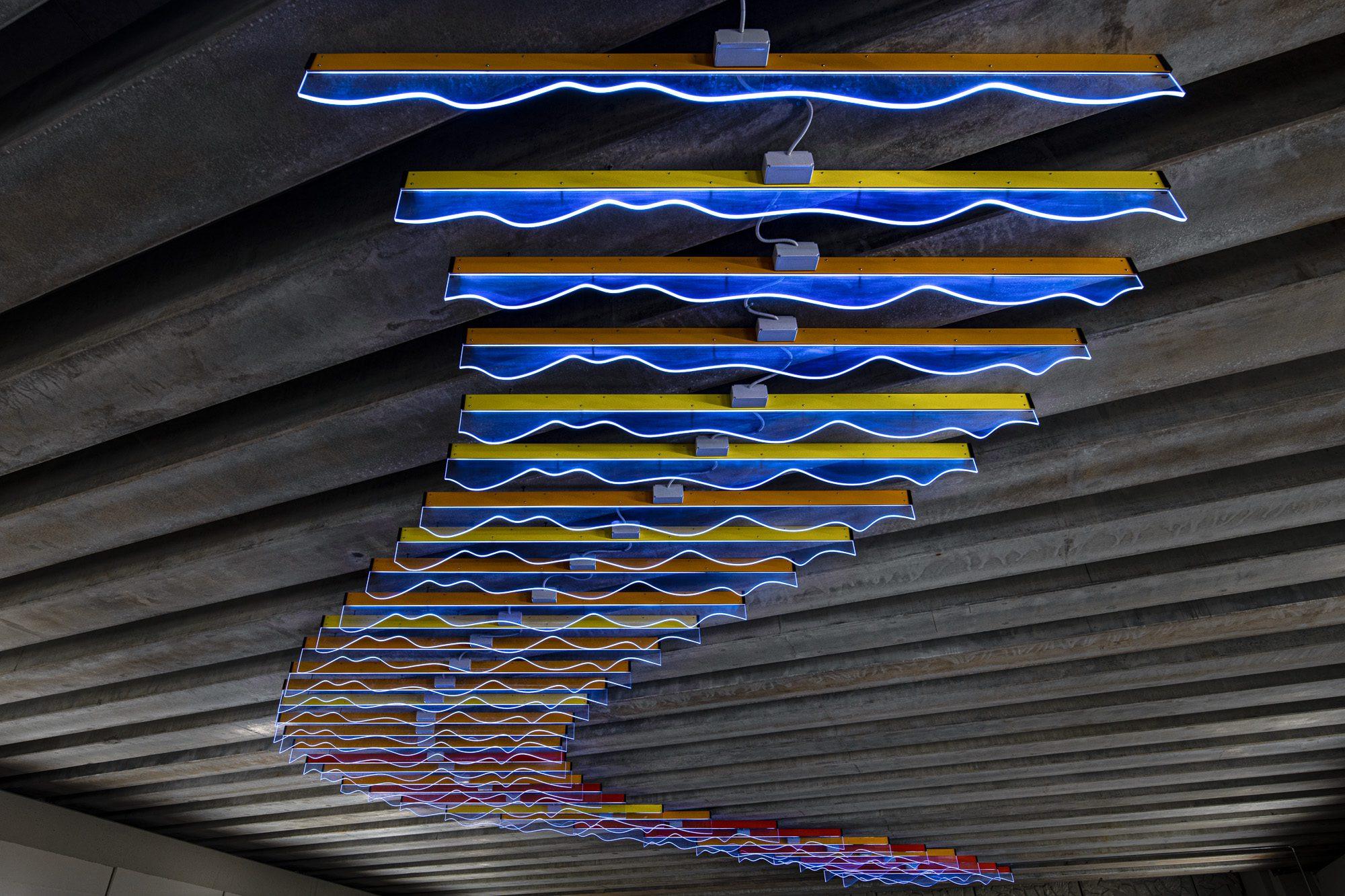
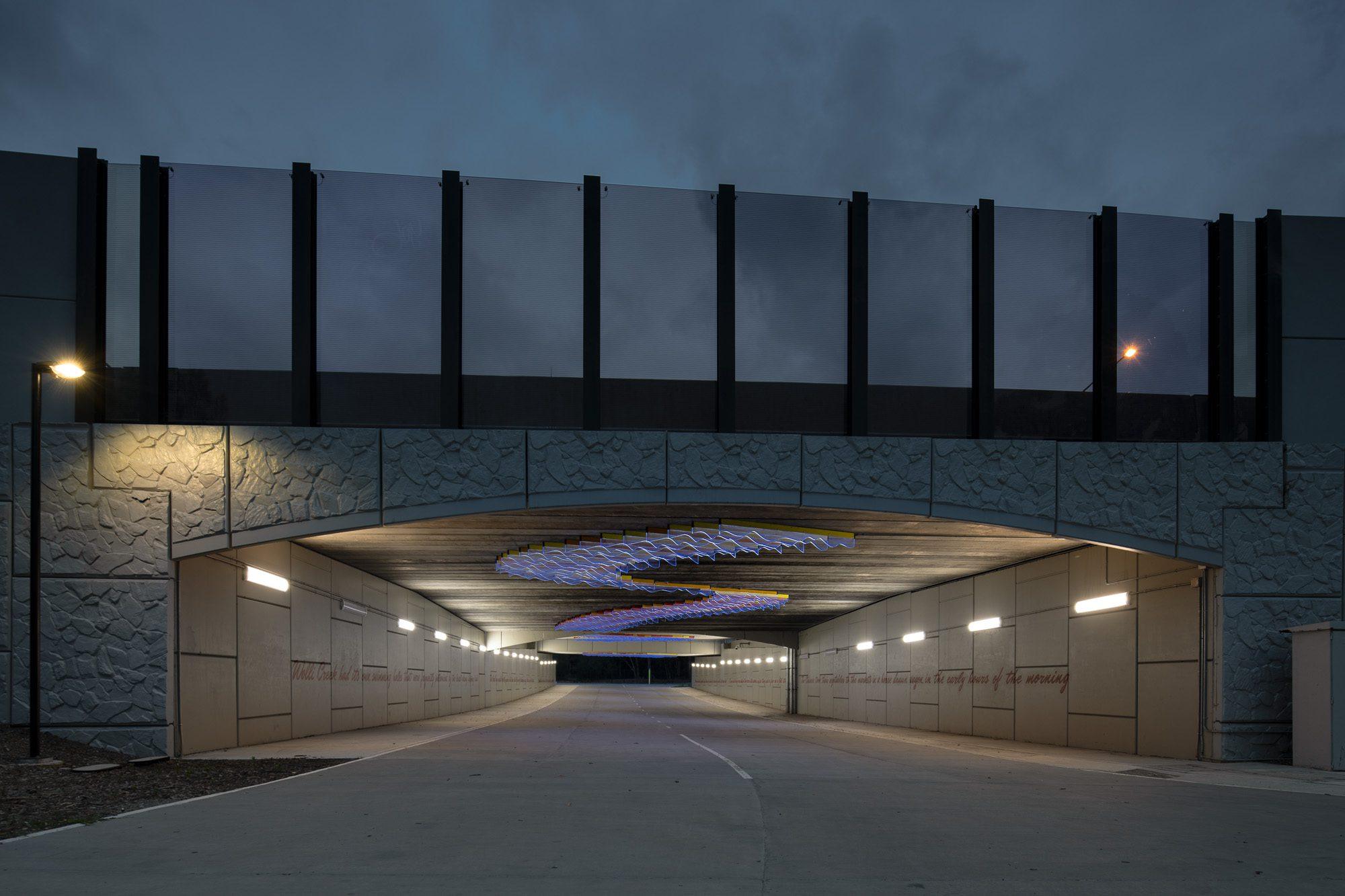
Warren Langley’s Wolli transforms Kindilan underpass in Beverly Hills into an experiential lighting sculpture. It is inspired by the nearby Wolli Creek, and attempts to capture the beauty of sunlight reflecting off its rippling water.
Pure white light emanates from carved polycarbonate blades that are suspended from the ceiling. The blades meander through the underpass, gently curving like the natural flow of the creek. Each blade represents a ripple effect, creating a sense of movement through the underpass.
Langley says “putting an artwork in there, particularly a light-based work, really can activate the space and just change it. It was important to me that this was an artwork that didn’t require you to pause. It was about an experience of walking through it.”
The artist worked with the local community to draw out their stories and relationships to Wolli Creek. A competition was held with the St George Photographic Society where the community was invited to create imagery that shows how the natural environment shapes their experience. The artwork responds to these community interpretations of Wolli Creek, providing meaning to their lived experience of place.

Nicole Monks, waranggu: Rainbow
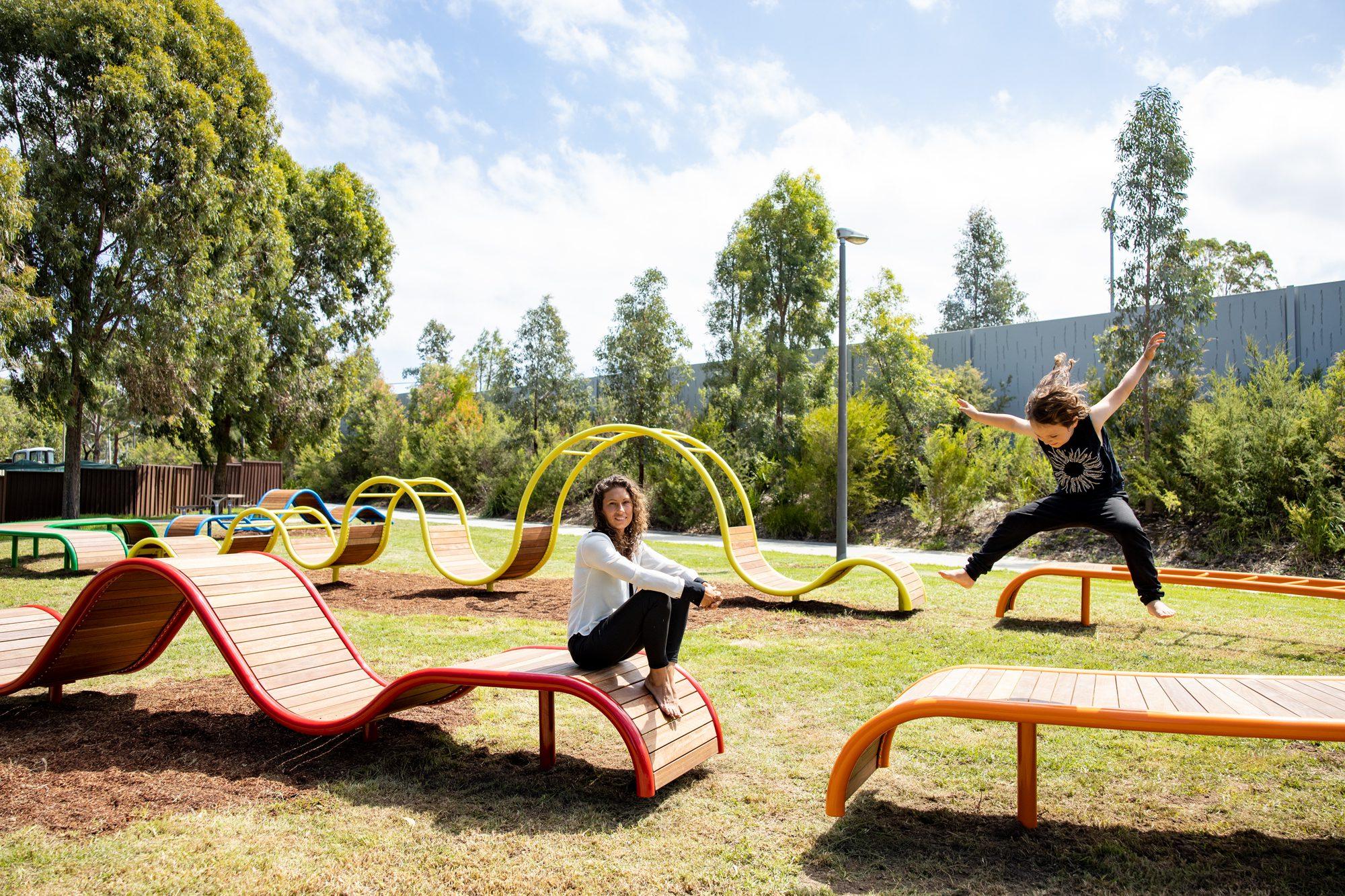
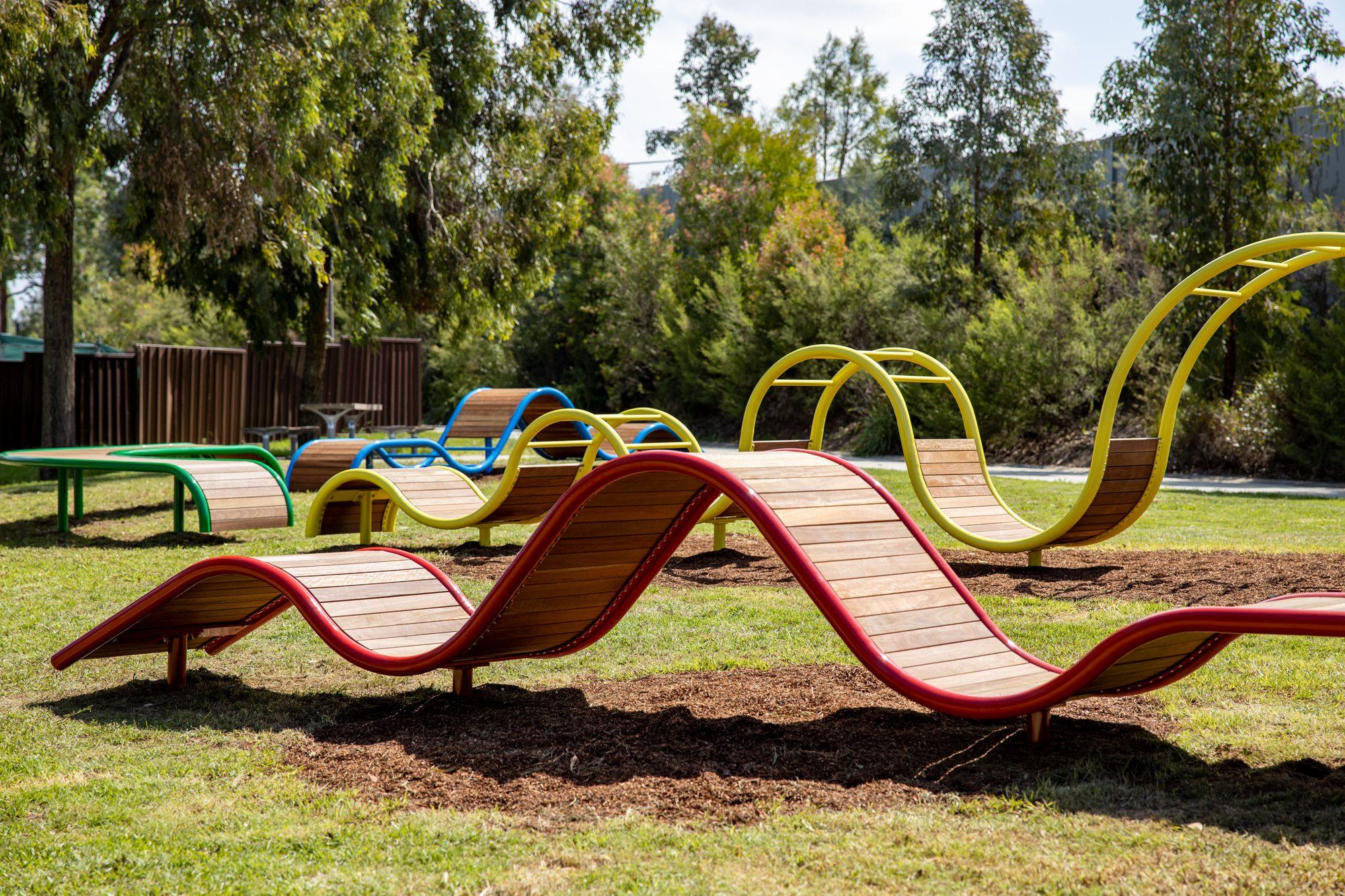
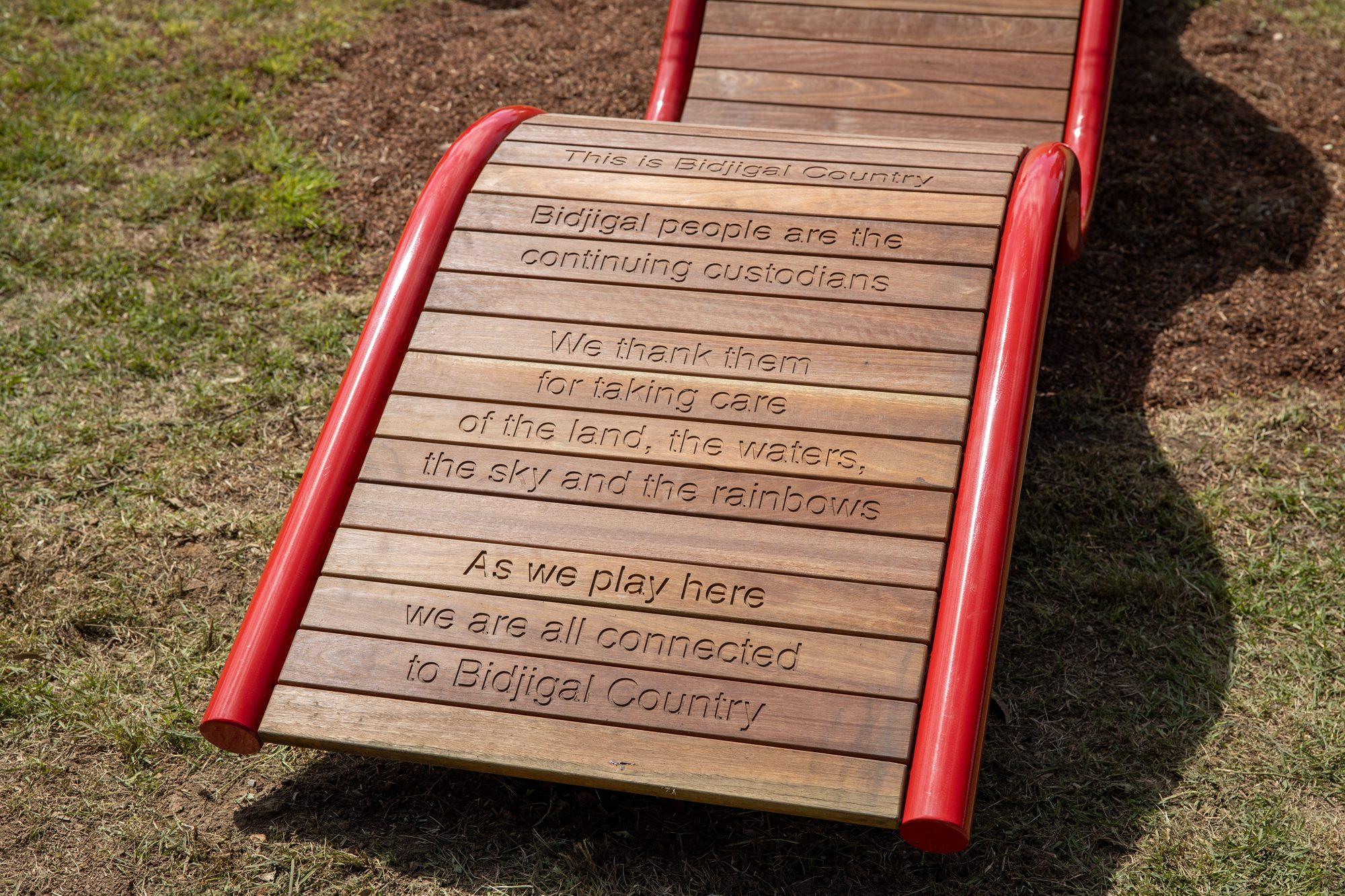
Nicole Monks’ artist-designed playground is a tribute to the Local Mob – the Gadigal, Bidjigal and Gwegal – Water People who swam, hunted and fished with their children in bark canoes on the local waterways.
The artwork is to acknowledge the women on the waterways of Gadigal, Bidjigal and Gwegal country that stretches from the Canal to the Creek.
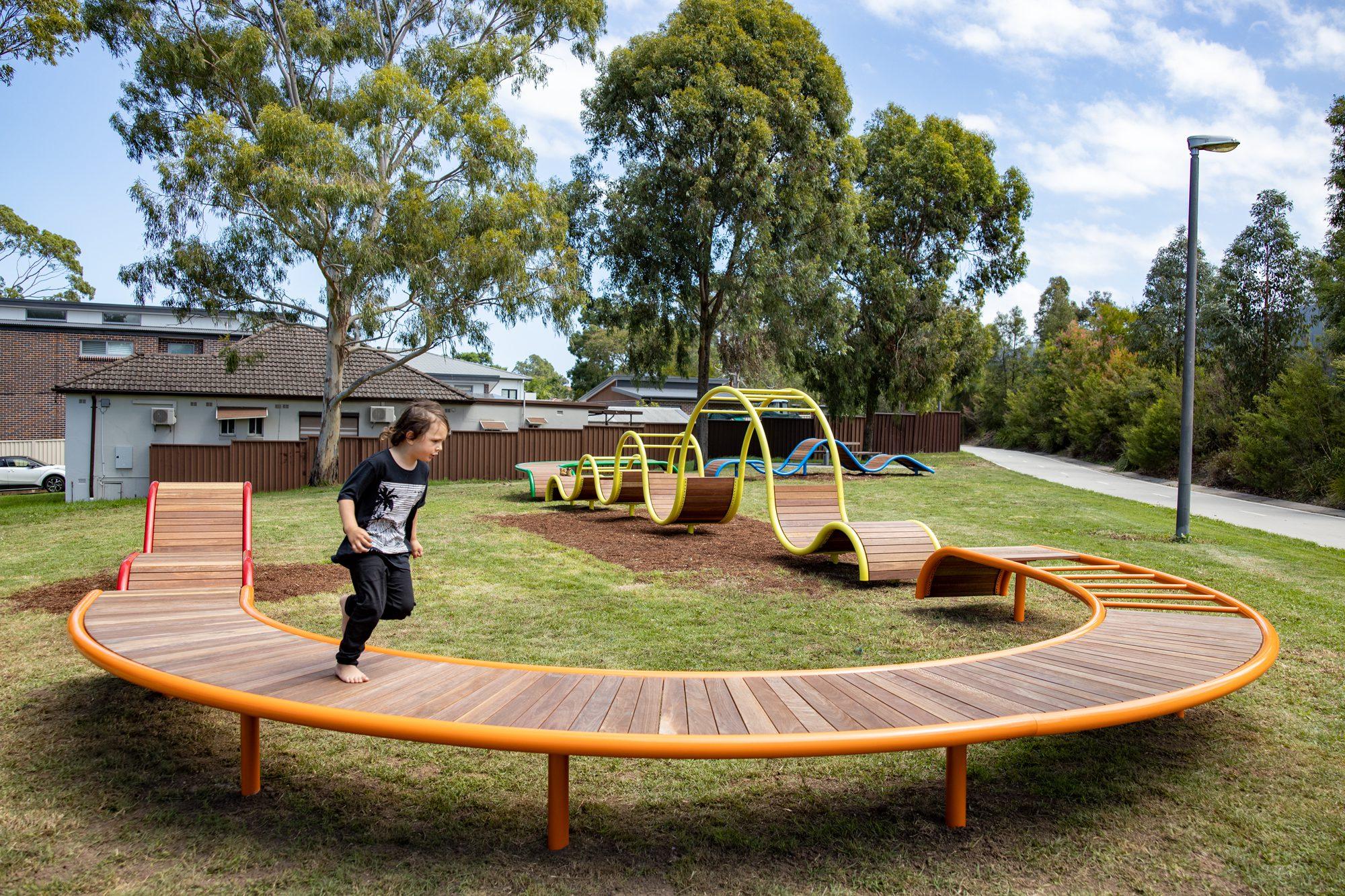
The interpretive playscape encourages learning and interacting with the landscape through play. It takes the form of a long, fluid line of movement, referencing the elemental flow of Wolli Creek and Cooks River. The bright, colourful palette connects us to sky and waranggu: rainbow. This Indigenous perspective of place is expressed in a contemporary form that brings together communities of children from all cultures to play, learn and grow.
waranggu is designed for imaginative and non-prescriptive play experiences like climbing, hanging, walking, crawling, running, swinging and resting.


Dan Templeman, Eight Rings
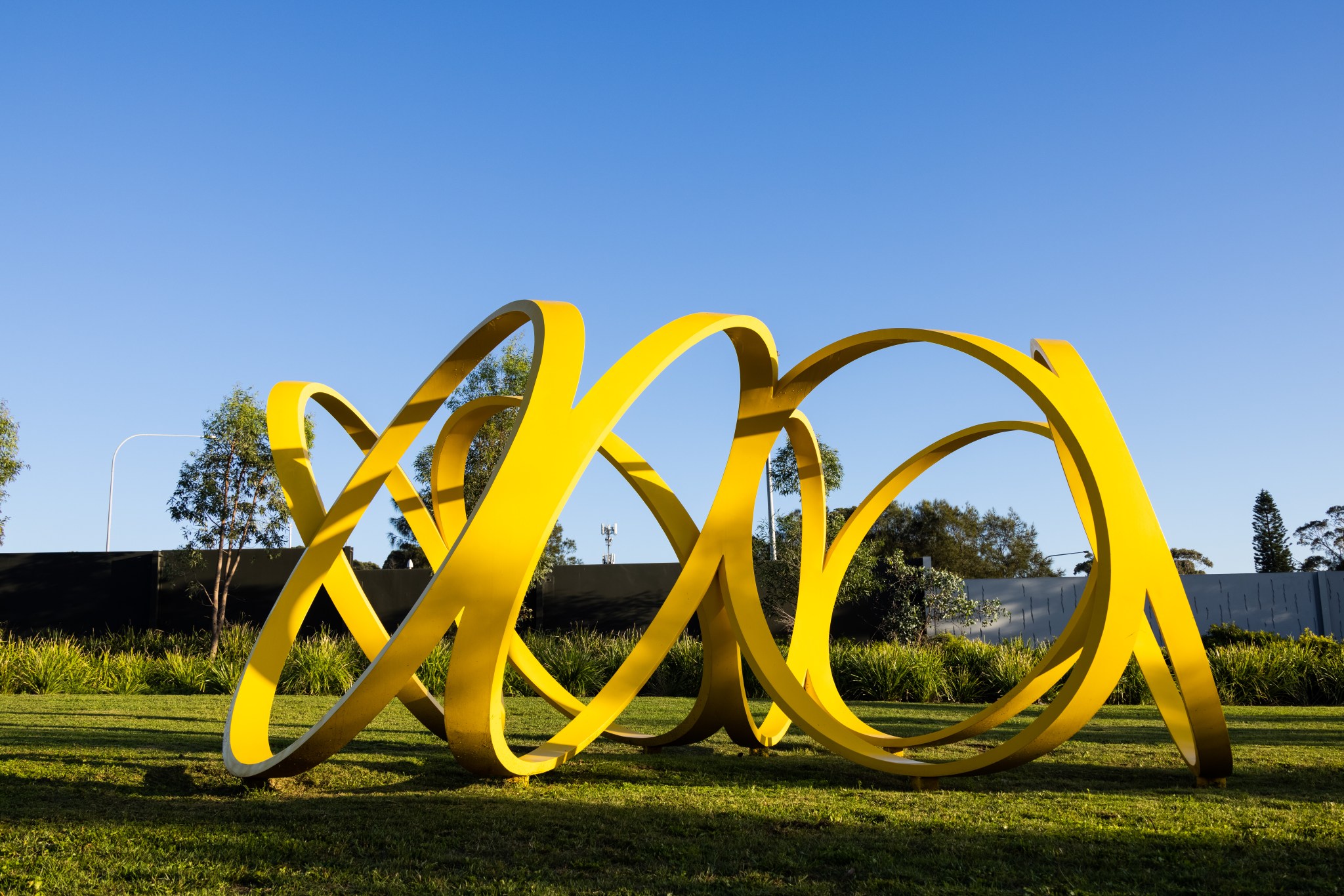
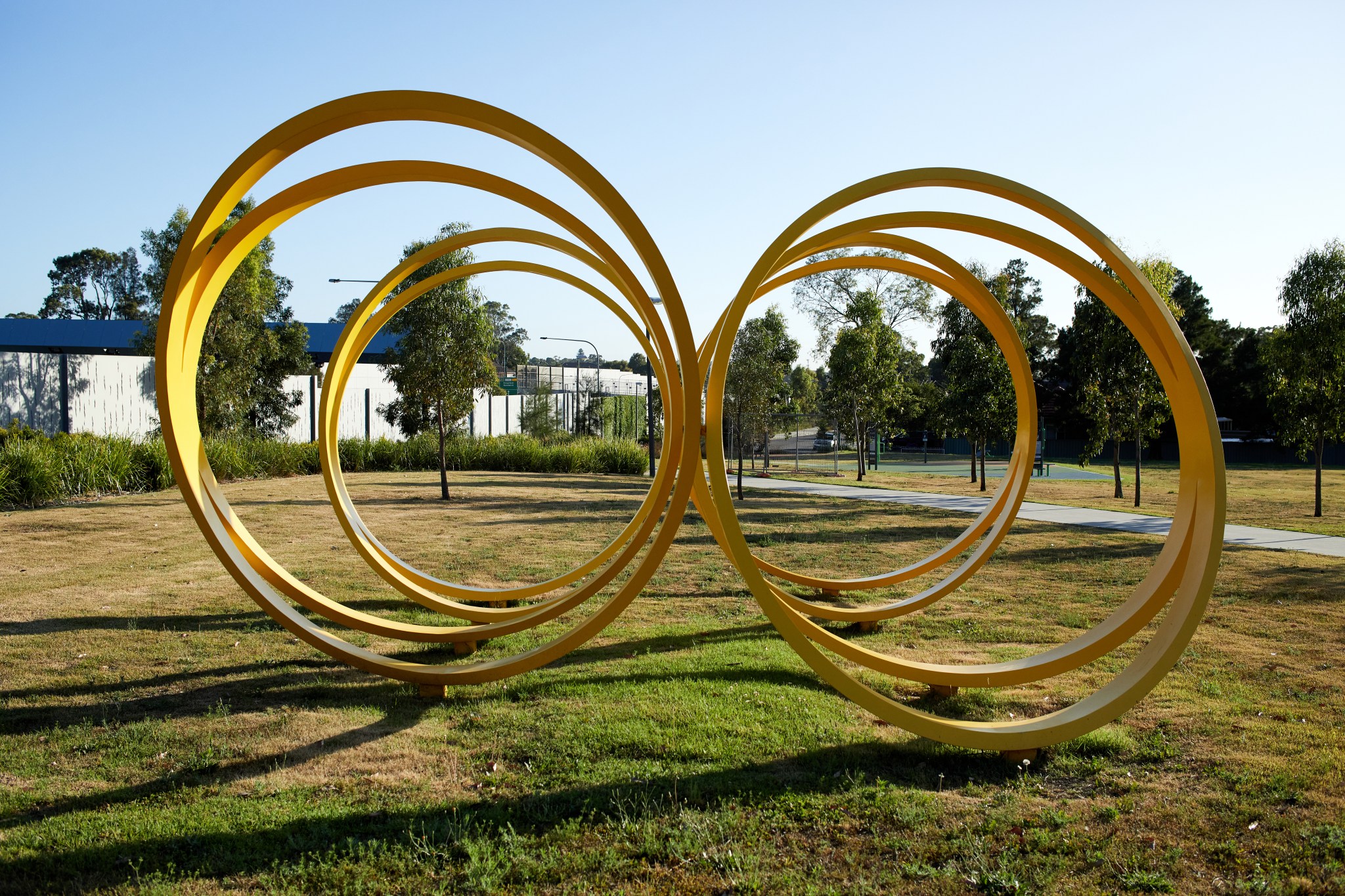
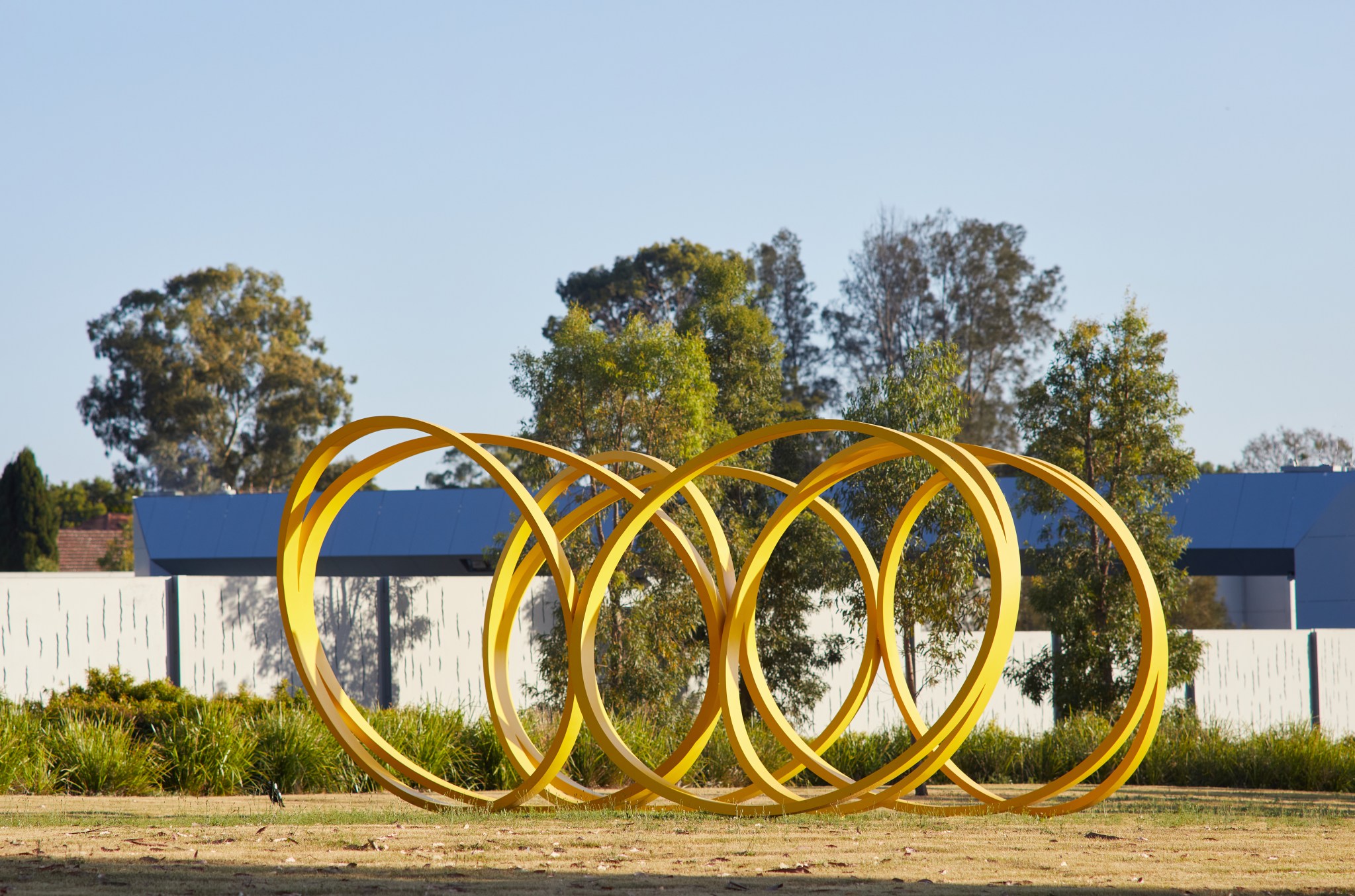
Dan Templeman’s vibrant work Eight Rings transforms Linear Park near King Georges Road, Beverly Hills. The work is created for the enjoyment and engagement of adjoining residents and users of Linear Park, helping to activate the existing parkland with this exciting cultural intervention.
Templeman says “The idea for this work really stemmed from the concept of movement and people moving through as it relates to the WestConnex project. My real hope is it gets people moving, physically moving so that they come and see the work, they want to explore, they move around it.”
The work is conceived as two identical sets of four rings ‘cut’ from two identical cylinders. The two sets of rings touch and by ‘turning’ the rings away from each other, a complex dynamic emerges in which foreground and background merge and separate in a jumble of seemingly disparate arcs.
As the viewer moves around the work it appears to change. The complex and scrambled form is quickly untangled when the viewer moves to apprehend the singularity of each set of rings. The re-joining of the eight rings into a set of two gives the artwork an elusive quality that promotes exploration and engagement, transforming the environment and one’s perception of it.


Christina Huynh, Fantastic Worlds
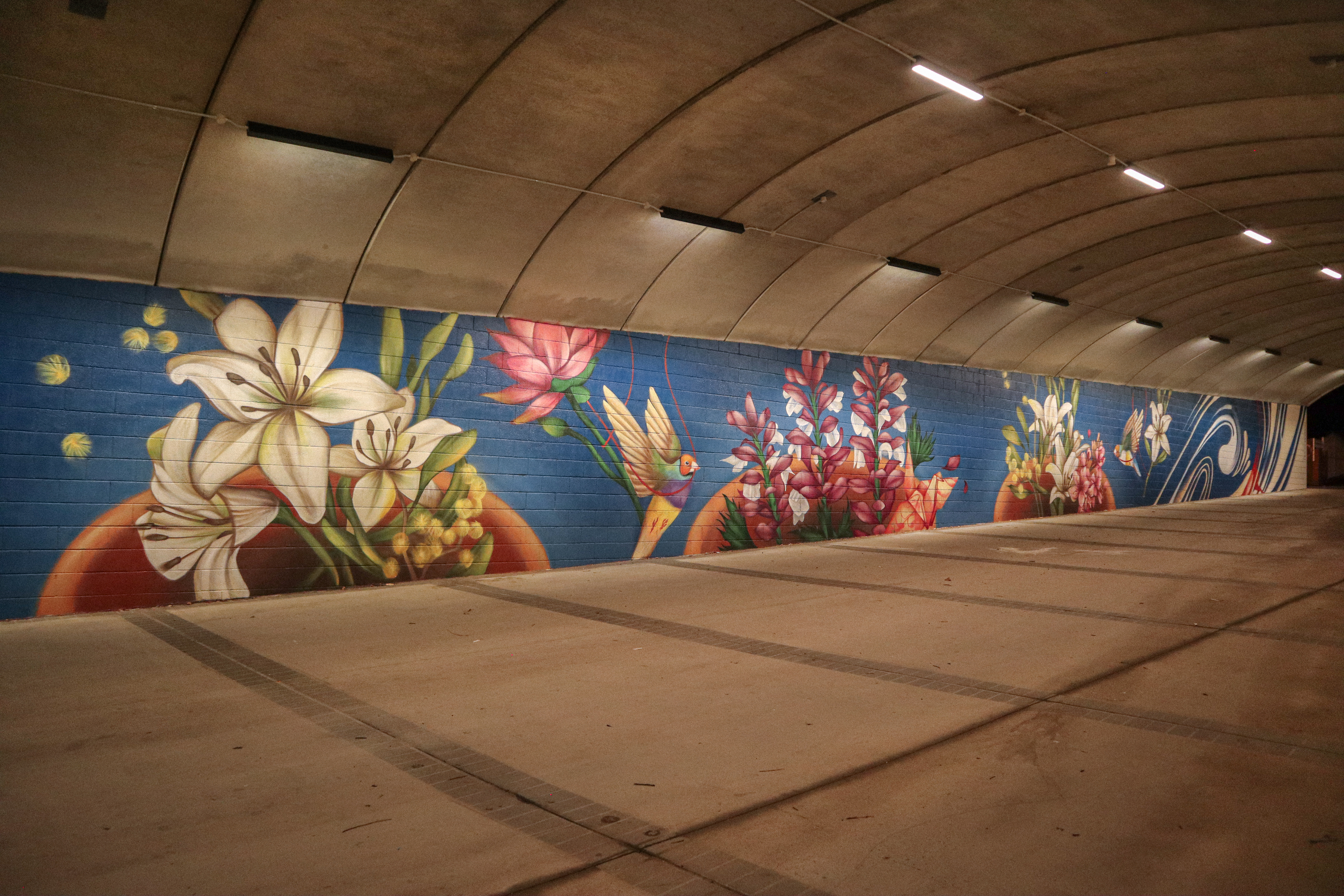
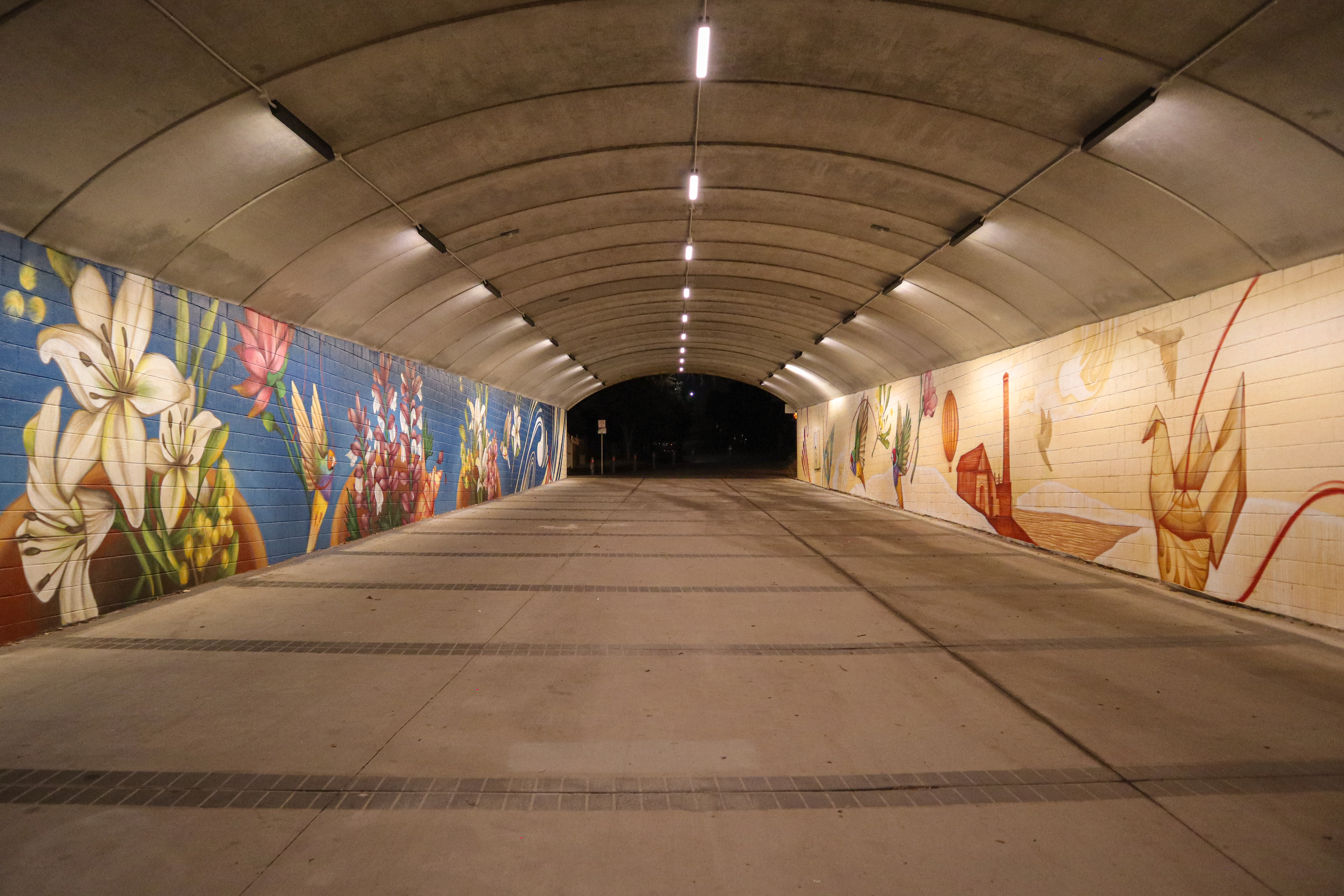
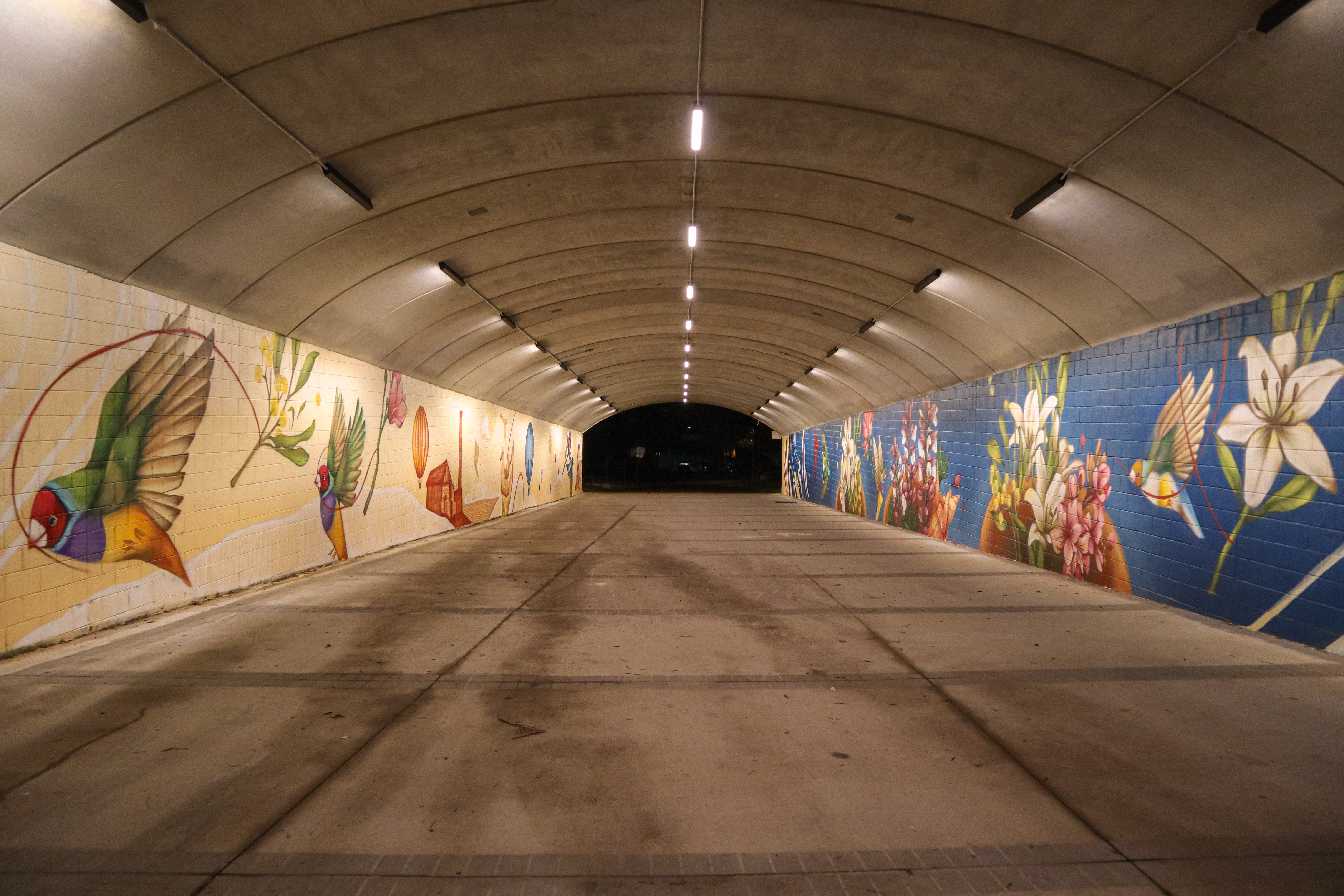
Christina Huynh (aka STYNA) is a Western Sydney based artist whose work is inspired by travels to faraway places, storytelling, and heritage. She brings these themes to her new large-scale painting Fantastic Worlds at Lundy underpass, Kingsgrove.
The work celebrates Kingsgrove’s local heritage and cultural diversity. Key elements in the work are the native Gouldian finch, national flowers from around the world, and a series of terracotta pots. The pots reference Mashman Pottery Works which opened in Kingsgrove in 1910- 2010 and produced traditional terracotta products. Many of these objects are now part of significant decorative arts collections including the Powerhouse Museum. STYNA pays tribute to this long tradition of arts and craftsmanship that is part of Kingsgrove’s heritage.
The idea of the work is to convey that fantastic worlds aren’t so far from our day to day – when one seeks it, there are actually things happening all around.


Emily Crockford, Oysters Eating Rainbows
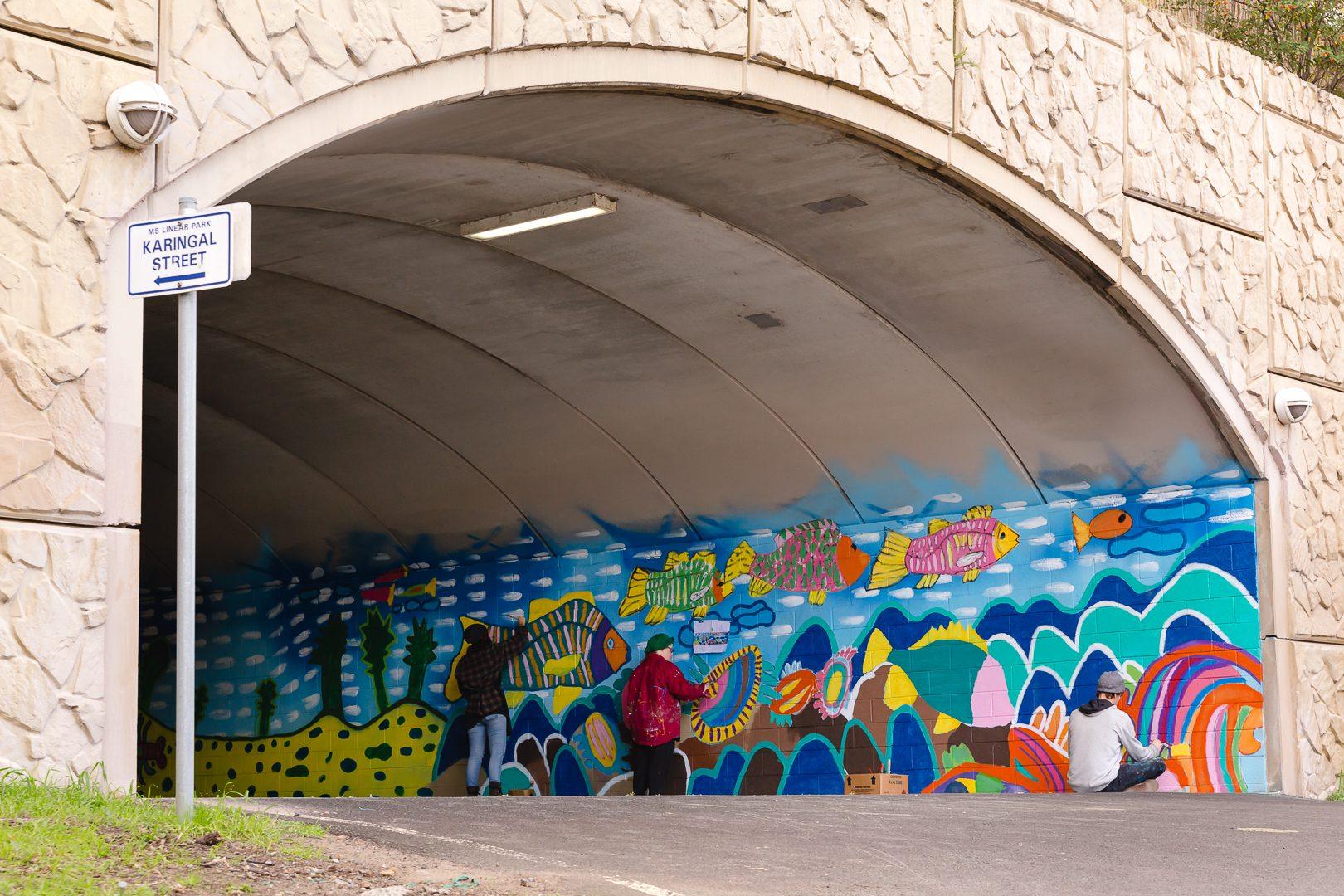
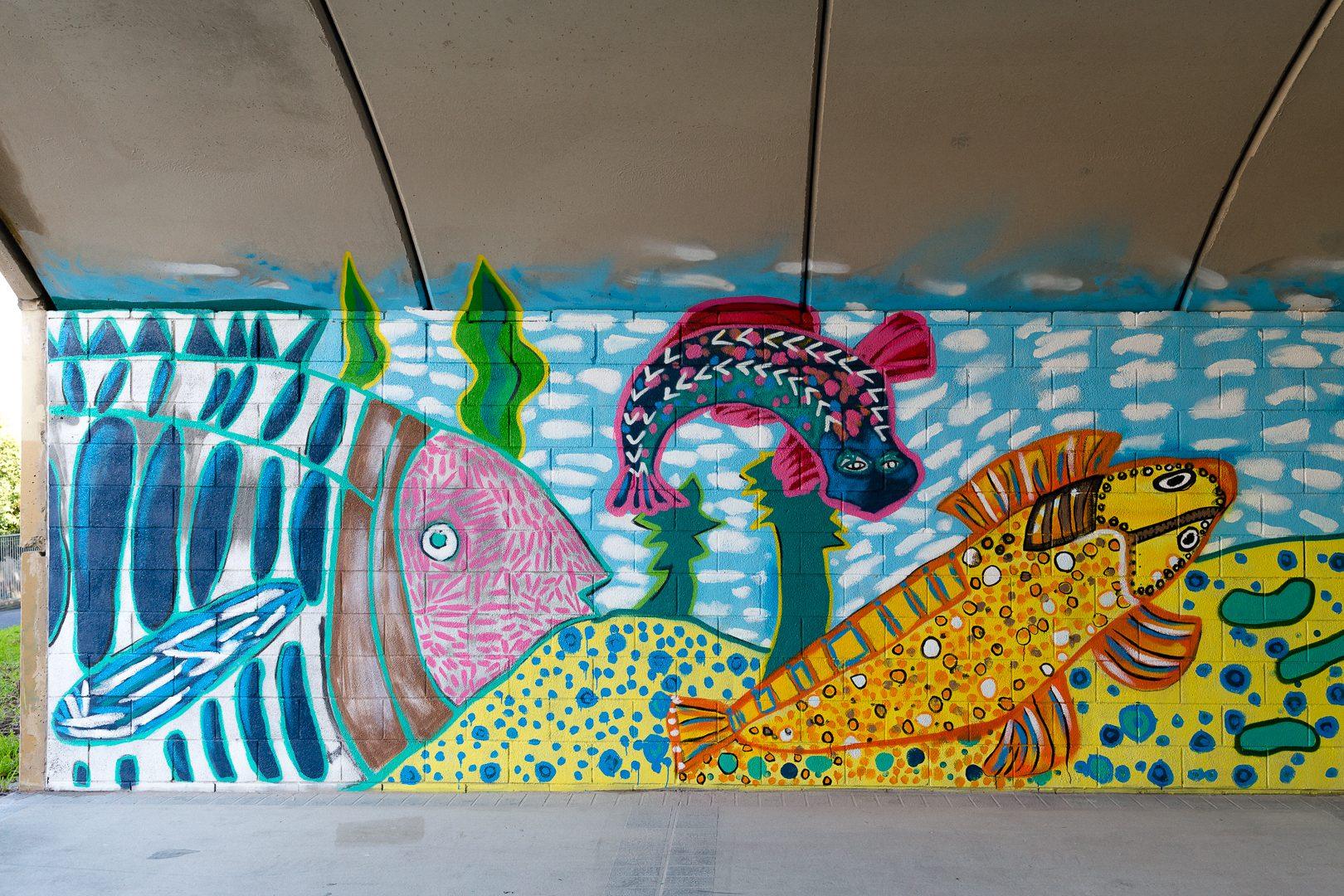
Emily Crockford (Studio A) transformed Kingsgrove’s Karingal underpass into an immersive art experience using large-scale painting and lighting installation.
Titled Oyster’s Eating Rainbows, this work will create a natural wonderland within the tunnel environment. It is inspired by the ecological abundance and diversity of the area and its waterways: the birds, fish, yabbies and oysters. It is also a reminder of the fragility of these habitats and the importance of preserving our skies, branches and riverbeds for future generations to come.
St Peters to Beverly Hills, NSW
WestConnex | Transurban
WestConnex
Emily Crockford, Gill Gatfield, Deborah Halpern, Mike Hewson, Hanna Hoyne, Christina Huynh, Greg Johns, Adam King, Stephen King, Warren Langley, Nicole Monks, Tom Misura, Mistery & Mikey Freedom, Yioryios Papayioryiou, Andrew Rogers, Dan Templemen, Jason Wing, Gordon Young
2020

Address
-
Suite 102, Level 1, 7 Kelly
St Ultimo NSW 2007
Address
-
Suite 102, Level 1, 7 Kelly
St Ultimo NSW 2007
- Cultural Capital is a NSW Government Approved Supplier
- 2026 — Copyright