Movement of Shells, Movement of Time, Aunty Esme Timbery and Marilyn Russell
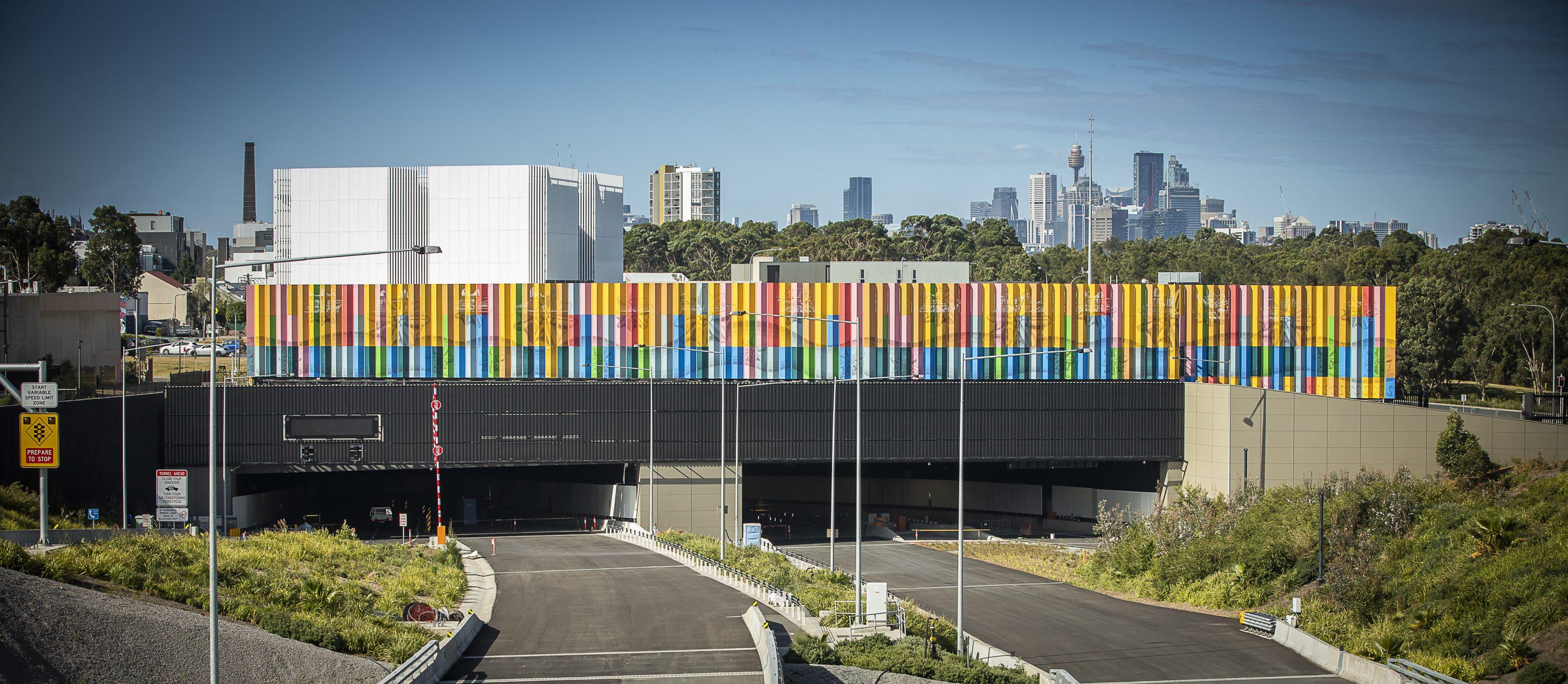
The iconic artwork wraps around the ventilation outlet above the entry to the M4-M5 Link Tunnel. The symbols in the artwork reference the Bidjigal people and Timbery family as Saltwater People, and the tradition of shellwork handed down from mother to daughters through the generations.
Cultural Capital was engaged by Acciona Samsung Boyues Joint Venture (ASBJV) to curate an integrated facade artwork for the Westconnex M4-M5 Link Tunnels Ventilation Building. Cultural Capital worked in partnership with curator Tess Allas in a hands-on curatorial capacity, working closely with both the project’s design team CM+ and acclaimed Bidjigal artists Marilyn Russell and her mother Aunty Esme Timbery to realise ‘Movement of Shells, Movement of Time’.
The artwork features starrie shells placed in unified formation, signifying women, the long-standing tradition of shellwork and its cultural and family significance. The flow of water across the centre of the design signifies the Timbery’s family connection to saltwater, the flow of tides, oceans and connection to Country; unifying the male and female symbology. The Bidjigal design at the base of the walls references the countless generations of Indigenous men and their craftsmanship while anchoring the design to the ground.
The colours integrated across the articulated panelling reflect the colours employed by the artists on their contemporary shellwork objects and symbolise flow, harmony and rhythm. The pink and yellows allude to the beauty of reflective light at dawn and dusk that coats the sand and shells as they are collected the way. These pink and yellows meet the hues of the teal ocean lapping the shores while the fuchsia strikes a bold tone to send a rhythm rippling through the façade wall.
The starrie shells placed in unified formation signify women, the long-standing tradition of shellwork and its cultural and family significance. This story of shellwork is a story-one of connection – between generations of Aboriginal mothers, sisters and daughters, between Indigenous and non-Indigenous communities, a combination of ‘white man’ technique and Bidjigal cultural knowledge.
The flow of water across the centre of the design signifies the Timbery’s family connection to saltwater, the flow of tides, oceans and connection to Country, unifying the male and female symbology. Water that flows through time and place as it once flowed in the open wetlands not far from this site.
The Bidjigal design at the base of the walls references the countless generations of Indigenous men and their craftsmanship while anchoring the design to the ground. This is inspired by Aunty Esme’s nephew, the late Laddie Timbery, who would burn this design into his many boomerangs and other cultural and utilitarian wooden objects.
THE PROCESS
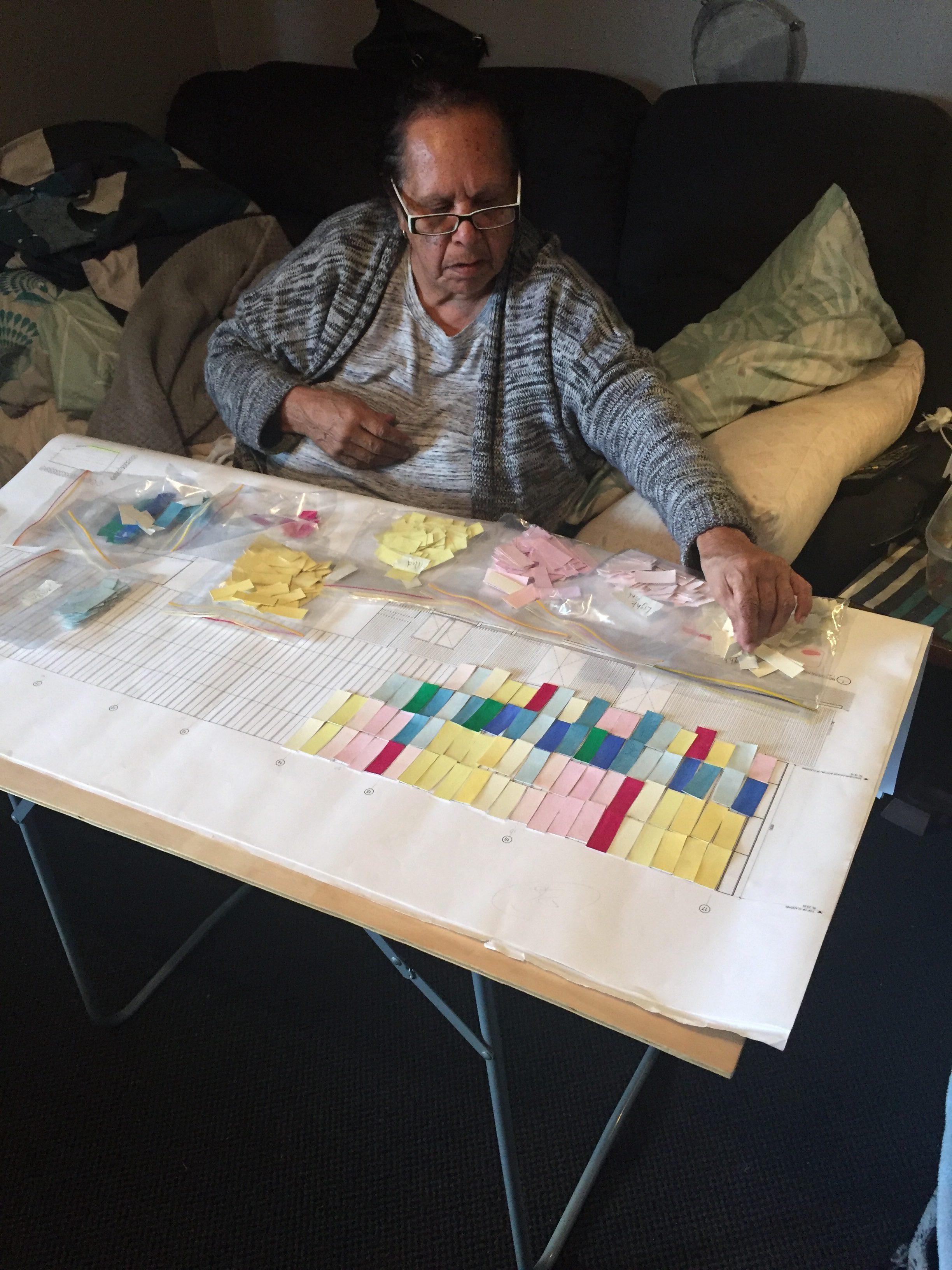
Cultural Capital and the CM+ design teams were privileged to be invited to the artists’ home in La Perouse over the course of much of 2019 to translate their vision into buildable components. An iterative process was employed to work closely with the artists, refine their ideas and, through models, sketches and computer renderings, arrive at a workable outcome that could be translated into architectural working drawings for contractors to implement. The artists were then continually engaged to review and guide the further development of their artwork through mock-ups and prototype assemblies on site during construction.
St Peters, NSW
ASBJV (Acciona Samsung Bouygues Joint Venture), Westconnex M4-M5 Link Tunnels